
You’ve got the challenges for-profit businesses to deal with, such as increasing revenue, consolidating across multiple entities, budgeting, implementing internal controls, and facilitating audits.
But you also face maximum scrutiny from regulators and watchdogs, with financial irregularities potentially causing disastrous hits to your reputation and fundraising efforts. Donors and partners will expect your not-for-profit organisation to be unimpeachable.
Your stakeholders or donors will require accurate reports to keep financial tabs on their investment. You may need to show donors exactly where their resources have gone, which means isolating activity for each revenue source to create a series of specific reports with unique requirements.
You can create contextually rich reporting that includes critical outcome and performance metrics.
Fortunately, with cloud-enabled financial management technology, there are ways to make your job as a non-for-profit CFO and your finance team’s roles more manageable.
Why traditional accounting is too complex
One big problem for not-for-profit organisations is the way conventional accounting systems work. Traditionally, with accounting systems, you produce a chart of accounts (CoA) that has thousands of unique account numbers, as they are forced to use a hard-coded structure.
As a result you end up with a long list of account codes. To make matters even worse, you’ll need to create potentially hundreds of additional accounts every time you want to add a new location, department, or program.
Unless your not-for-profit organisation wants to create a sophisticated and unwieldy chart of accounts, you won’t be able to create reports to track all the transactions you create.
Why should you use dimensional accounting?
With modern cloud-based financial management solutions, you can use a table-driven architecture that allows you to structure both your financial and operational data through logic-based dimensions. You can manage your general ledger using dimensions, which in turn makes it much easier to set up and use your chart of accounts.
Dimensions remove the overhead associated with complex, multi syntax chart of account structures. You can define dimensions – such as department, location, grant or project and tag transactions, enabling powerful reporting against both operational and financial data.
Dimensional accounting keeps things simple
Dimensional accounting keeps things simple for your not-for-profit organisation as you only need to set up primary account codes. Whenever you set new locations, funds or programs, you don’t need to add hard-coded segment combinations to create account numbers. Dimensions can work for any transaction – the general ledger, receivables, payables, time, revenue management, fixed assets and more.
Dimensional accounting helps you quit the spreadsheet
Having a dimensional chart of accounts means your not-for-profit organisation won’t need to pull information out of your accounting system and spend time manipulating it into a spreadsheet. The benefit being that through your system of record you can track performance closely and retrieve information instantly.
You can compare dimensions within a chart of accounts to how hashtags work on Twitter. You can search and sort data for reporting with meaningful context. If you can tag transactions with dimensions, you can slice and dice data to produce financial reports.
You can filter dimensions when you need reports, allowing you to show the exact information you need in the right format. If you save these filters and the format settings, you can repeatedly create the reports you need.
Dimensional accounting helps you provide more insightful financial analysis
With a dimensional chart of accounts, you can organise information by the attributes that matter most for your not-for-profit organisation’s mission, empowering you to perform the meaningful analysis of your performance. With multi-dimensional analysis, you can increase visibility by, for example, enabling drill downs from a BI dashboard, providing granular transaction details.
With dimensions you can analyse financial performance across multiple entities through the power of real-time dashboards. By tagging projects in transactions, you can analyse business performance project by project. You can quickly compare expenses and revenue between programs and locations, for example.
Adding operational context to improve visibility
Not-for-profit organisations with the right cloud management software can take advantage of statistical features that allow you to bring on-financial operational data into your financial reporting.
Traditional general ledgers provide the information needed to create generally accepted accounting principle (GAAP) reports, but if you enhance the general ledger with non-GAAP statistical data, not-for-profit organisations can also track and report on operational outcomes.
You can create contextually rich reporting that includes critical outcome and performance metrics by applying dimensions to the operational data. This contextually rich reporting increases the overall visibility and provides organisational decision-makers with a complete picture of performance.
Dimensional reporting increases donor transparency
If you combine financial performance data with real-world outcome metrics, you can produce reports that show the successes you are having with your mission. With multi-dimensional analysis, you can increase your transparency and visibility for your donors. You can tell donors the complete story of your not-for-profit organisation’s impact by bringing together financial, operational, and impact data.
For a not-for-profit organisation, dimensional accounting provides:
- Reduced complexity and higher efficiency in transactional data entry
- The ability to slice and dice reports without spreadsheets
- Better decision making with real-time analysis
- Broader and deeper financial visibility, with greater operational context
- Increased transparency for donors
- Better visibility into the impact of your mission
To take advantage of the power of multi-dimensional accounting, organisations need to use a modern cloud financial management solution.
Not only will dimensional accounting greatly simplify the lives of your finance team, but it will also empower you with greater insight, helping your organisation support its mission and build a story to compel existing and future donors.
 ABOUT STEPHEN DUNCAN//
As product marketing manager for Sage Intacct, Stephen draws on over 25 years in the software industry to help Australian businesses and not-for-profits simplify financial management with innovative technology.
As the coronavirus (COVID-19) pandemic spreads throughout the world, governments, businesses and not-for-profits (NFPs) race to adapt and respond to limit human hardships.
As the Australian government for example places restrictive measures on its citizens and economic programs in actions, this is creating uncertainty and causing a crisis of confidence in our financial market.
In this time of public health and economic challenge, NFPs need the full picture of where they stand financially so they can respond quickly to the changing needs in their communities. Although the Australian government is looking to prop up NFPs, the overall economic downturn is likely to cause a decline in donations. It’s critical that NFPs take stock of their current financial situation, take stock of cash flow projections and make early, intelligent decisions to shore up funding and engage donors.
“People want to believe they are making a difference.”
Community needs are growing – will donations keep up?
NFP finance leaders know that charitable donations are closely correlated with the economy. When the market is strong, as highlighted in the chart below, consumer confidence is higher and wages increase, translating to more disposable income and likelihood of generous corporate and individual donations. When it’s heading down, disposable income decreases, and donors are more likely to pull back.
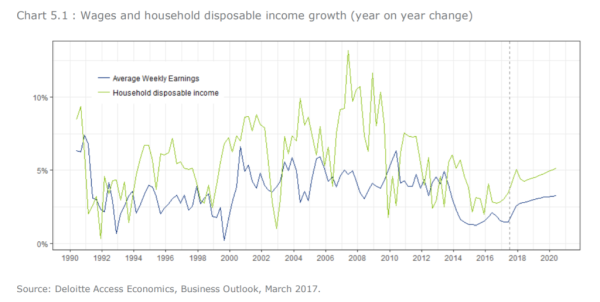
In light of so much economic uncertainty, it is more important than ever to engage your donors and show them the concrete results of how your programs are achieving your mission. Going forward, you’ll want to be able to powerfully demonstrate both financial stewardship and positive outcomes.
Seven things not-for-profits can do right now
No one knows exactly how the current health and economic crises will play out around the world or specifically in A/NZ over the coming months, especially with the Prime Minister stating that we may need to adapt for up to 6 months to completely control COVID-19.
To stay afloat during this crisis, NFPs must be proactive now to trim unnecessary expenses, review programs, and step up donor engagement in order to sustain existing programs and direct new efforts. Here are seven things you can do right now to increase your crisis management capabilities:
1. Steady and ready your team
For NFPs, organisations, people, relationships and community are paramount. COVID-19 has caused undue disruptions, anxiety, and uncertainty both at home, work, and in the community. Now with the stock market in a panic and uncertainty around when it will bounce back, this is likely to impact business donations.
It is critical to communicate with your team often, acknowledging the changing reality and expressing your organisation’s support and flexibility in these tough times. Help your team stay balanced and focused on long-term goals, while supporting day-to-day needs and priorities.
With virtually every worker now being asked to stay home, connecting via video conferencing has never been more important. It also opens up conversations more easily where previously it may have required a physical visit. The goal is to calm fears, support flexibility, stay positive, and encourage your valued team members on a regular basis.
2. Communicate with donors right away
NFPs need to get in front of the inevitable extra funding needs that the pandemic and economic weakness will cause. Ask your existing donors to help you create a cash reserve now that will help meet needs during this rapidly evolving situation. Ensure you have the support of your major donors, by providing them with extra confidence that their contributions are making a difference.
Increasingly, large donors are responsible for a larger share of total contributions. The goal is to ensure you remain among your major donors’ top priorities this year, knowing that smaller donors may have less to contribute in a volatile economy.
3. Stay on top of your financials
Now is an opportune time to deeply analyse your current financial situation. Where can you conserve cash now to prepare for a potential drop in individual donations? Are there any funds that can be redirected to existing programs that meet community pandemic or economic needs? What would it cost to spin up new programs that address new challenges? Your donors will not only appreciate your duty of care but feel as if they are making a difference.
4. Apply donor engagement best practices to your website and communications
Share your vision through powerful imagery. Make sure all your messaging builds and reinforces your brand. Bring donors into your story with metrics that demonstrate the urgency of your mission and personal stories of how you’ve helped. Expand your reach by ensuring your website, social media, and campaigns make it easy for people to give. Make sure you are responsive yet respectful to the current environment. Every donation helps, so people want to believe they are making a difference.
5. Review current programs
Knowing that needs will accelerate at the same time the economy is slowing, it’s time to study recent program performance in terms of financial outlays versus program impacts. What programs have made the biggest difference? What programs will be needed going forward? Your financial management system should be able to provide you with key performance indicators so your team can make informed decisions
6. Apply for new grants
If you will be offering services related to the pandemic, look for federal, state and local grants and apply early.
7. Get creative with fundraising
Social distancing rules have forced physical events to be cancelled or delayed for all industries. This will have a serious impact on in-person fundraising events, such as charity auctions, dinners, and sporting events. Think about how you could recreate some of these experiences online, or better yet, get creative and develop entirely new experiences. Tools like Facebook Live, online meeting software, and social media can help.
Looking ahead
These really are unprecedented times for all of humanity. For local NFPs, the pressure is likely to come from both sides – increased need and potentially shrinking donations. NFP crisis management will require flexibility and proactive management in order to make an impact, meet needs, and find enough funding. We’ll all need to pull together to get through these extraordinary challenges.
Local NFPs will face uncertainty on two fronts – a worldwide public health crisis coupled with worldwide economic contraction. At Sage, we stand with you and wish to express our support for this indispensable industry of caring. We know you will emerge from challenging times stronger, having found innovative ways to assist your communities by staying nimble.
ABOUT STEPHEN DUNCAN//
Stephen Duncan is the product marketing manager for Sage Intacct. He draws on over 25 years in the software industry to help businesses and not-for-profits simplify financial management with innovative technology.
AU: 1800 462 388 · +61 401 189 448