
Australian print powerhouse Konica Minolta has transformed into a more customer-centric business with SAP Analytics Cloud and Business Warehouse on SAP’s in-memory database bolstered by Amazon Web Services, a significant milestone in their SAP roadmap designed to delight customers.
From the local corner shop to a meat processing corporation, print remains a cornerstone of modern business operations and nothing short of essential for commercial, industrial and medical progress. Having successfully embraced digital disruption, the print industry is thriving, but, as with so many other industries today, the gap between the top players and the laggards is widening.
“From a performance perspective, the speed at which people can access data and present data is almost night and day.”
Konica Minolta has over two million customers worldwide consuming its solutions including traditional, industrial and 3D print, robotics and imaging plus a variety of tailored content and print services. Locally, Konica Minolta Australia has about five hundred employees servicing over eight thousand customers.
The remnants of change
Konica Minolta’s SAP systems were first implemented in 2007 but since then customer expectation has changed dramatically, and so has its business. Nick Jones, Chief Information Officer (CIO) for Konica Minolta Australia explains, “We’ve seen the shift from customers buying outright to leasing to subscription consumption and we’ve modified our processes to suit. We’ve developed solutions adjacent to our core business and customised our systems to suit that. Now, we’re into robotics and 3D and needed to change again.”
“Without agility, we started to hit roadblocks. We needed to be able to respond to customers quickly, improve our speed to market and find new ways to market,” explained Jones.
With an ageing, on-premise, and heavily customised SAP landscape including ECC6 Enterprise Resource Planning (ERP), Customer Relationship Management (CRM), Business Warehouse (BW) and Business Intelligence (BI), Konica Minolta Australia (Konica Minolta) was restricted in its ability to keep up with changing customer demands. Customisation had created technical debt and increased employees’ dependency on the IT department which amplified Konica Minolta’s challenges with agility and speed to market.
It was time to rethink foundations.
Sequencing an SAP transformation
“A fundamental pillar of our new strategy is Delighting Customers and we’re building out our tech stack to support this,” says CIO Jones.
To forgo the challenges created by the last 14 years in its customised ECC system, achieve standardisation, scalability and bring in new Finance and Logistics capabilities, Konica Minolta decided to deploy S/4HANA on AWS. “We decided early on to adopt not adapt. To follow best practices and leverage the native functionality that S/4HANA comes with, to ensure our business can make use of all the R&D SAP will do going forward, and ensure we keep our systems in a good state,” says Jones. “It was also important to us to move to cloud infrastructure to achieve greater scalability and flexibility.”
It was determined that a modern data warehousing solution was required to become the central repository and source of truth for historic and ongoing ECC and CRM data as well as for new S/4HANA data as it gets built out.
In early 2020 Konica Minolta brought on Zag (part of Accenture) as its SAP Support partner to help with day to day running of its SAP ECC and CRM systems. Impressed with the quality of service and expertise demonstrated, Konica Minolta also chose Zag to deliver its data warehousing and analytics project, but it first had some pain points to overcome.
|
Pain points related to the old and unsupported BW environment
|
Zag proposed the following solution to these challenges:
Driving insight into action with SAP on AWS
The solution encompasses an upgraded BW environment on SAP’s fast in-memory HANA database hosted on AWS cloud infrastructure, with SAP Analytics Cloud as the reporting and visualisation tool. These four elements to the solution address Konica Minolta’s business challenges by driving more insights from the magnitudes of data they have and putting it in the hands of the right people to delight customers.
Database & Data Warehousing
Upgrading SAP BW 7.31 (Support Pack 5) to BW 7.5 on HANA to provide immediate performance benefits upon the conversion of current data models and, with integration to both SAP ECC and S/4HANA being fully supported, Konica Minolta can extract data from the CDS views layer in HANA for data modelling as well as its current extractors. With an upgraded and fully integrated BW environment, Konica Minolta has a single platform and source of truth for historic and new SAP data that allows the greenfields ERP implementation to follow best practice standardised processes without compromising Konica Minolta’s ability to execute valuable year-on-year analysis.
Analytics
In terms of visualisation and interaction with this data, SAP Analytics Cloud (SAC) is a modern Software-as-a-Service solution based on HANA that utilises the SAP Fiori interface to provide users with autonomy and flexibility. SAP BW 7.5 is supported by SAC and SAC has native integration with SAP HANA-based ERP systems and BW allowing Konica Minolta to have live connections to SAP BW and SAP S/4HANA. This puts real-time information in the hands of Konica Minolta’s users who can develop, share, and collaborate on reports and dashboards. Down the track, the crossover to S/4HANA will be seamless as SAC uses the same environment and interface.
As SAP’s focal point of innovation, implementing SAC gets Konica Minolta onboard SAP’s roadmap for analytics. Quarterly updates are automatically applied to the system bringing new functionality and fixes without the need for downtime or maintenance by Konica Minolta or its service providers.
Cloud
Konica Minolta saw moving to cloud infrastructure as a critical piece in its transformation and chose to leverage AWS as its strategic cloud partner for SAP and beyond. For Konica Minolta, AWS was an existing and proven partner. They already used AWS for billing in the Customer Solutions department and customers were satisfied with these hosting arrangements. “As a platform, AWS is proven to be reliable, secure, and sustainable – it works 99.9999 percent of the time, customers are happy, and what they put in there from an R&D perspective is unbelievably good,” elaborates Jones.
“From a partner and relationship standpoint, AWS are awesome to work with, they provide a great customer experience.”
Going to BW on HANA in AWS with SAC
“When Zag proposed the upgrade and delivery of BW and SAC in a six-month start to finish project, there was some nervousness given the planning and design for S/4HANA was already underway, but we trusted Zag and we’re glad we did; it was a good decision to complete this project when we did.”
“The Zag team really delivered on this project, they brought their best people and AWS came to the table too delivering the infrastructure within seconds, which was fantastic.”
Remarkably, the project was delivered 100% remotely due to COVID-19 inflicted lockdowns. Important learnings concerning remote delivery will be applied to the S/4HANA project. “Another benefit to executing this project as a prerequisite is that it gave a diverse set of our employees insight into what the bigger S/4HANA project might be like,” says Jones. “As we hadn’t been through many system changes in last 14 years, it was good to prepare people for what that might look and feel like.”
Project success factors
There were several crucial factors that contributed to the successful implementation:
Proven delivery methodology – “We followed Zag’s delivery process, which is based on SAP’s Activate methodology and brought assemblance to the challenges we had and a consistency in approach which was great.”
Right people working together as one team – “It wasn’t like we were three different companies ; we were one project team working together towards the same deliverable.”
Stayed true to the project’s objective – “We successfully built a repository for old and new data that ensures business continuity and we have delivered an analytics dashboard for each of our four business divisions – with more beneficial capability coming in the future.”
Effective SAC training and support – “The training was a huge success and I have received some great feedback not only on the content of the training but also on Zag’s trainer and the structure and approach he took,” says Antoniette De Marco, National Manager Business Systems and Applications.
“During the project, we had helpful, robust conversations with our partners – often challenging conversations – and in that process, we built a really strong team that is now rolling into the S/4HANA project with a solid foundation for moving forward,” said Jones.
The upgraded BW environment is the first major system to go live on AWS, with S/4HANA coming next.
Reaping the benefits
The new SAP data warehousing and analytics solution is helping Konica Minolta pull different systems together to gather a 360-degree view of its customers and put these real-time insights in the hands of employees who are interacting with customers to empower their decision making in the moment.
“From a performance perspective, the speed at which people can access data and present data is almost night and day. Even purely from a look and feel viewpoint, it is a huge step up,” says Jones.
De Marco says, “SAC is really starting to be embedded in our business and its capability is a real value add for Konica Minolta in helping us drive forward our digital transformation.”
|
The overarching benefits and outcomes are:
|
“Over the next year or two, there is a six-figure license saving based on decommissioning unneeded reporting and visualisation tools. On top of that, there is resource cost saving too, for lack of needing to manage and support those tools,” Jones outlines.
Looking to the future
The impact of the new BW and BI solutions on everyday operations is hugely beneficial, and the quick win got employees on board and ready for the bigger S/4HAHA project. “Going forward with S/4HANA, SAC will liberate a lot more functionality, including predictive insights, that our people can use to add even more value to the customer experience,” states Jones.
With a strong digital core in place, Konica Minolta will look to deploy lighter front of house engagement systems, potentially SAP Customer Experience solutions, as the next stop on its transformation roadmap.
Managing a multi-vendor technology stack can easily consume precious time, effort and budget that should be dedicated to value-added work.
New Zealand’s Department of Conservation (DOC) recognised that having a multi-vendor managed platform was absorbing valuable resources and creating a number of unnecessary challenges for its IT team. So, it set out to find a Partner Managed Cloud solution for its SAP platform that would get DOC back on track to doing what it does best – conservation.
Department of Conservation’s SAP footprint
DOC is the government agency charged with conserving New Zealand’s natural and historic heritage. Its purpose is ‘Papatūānuku Thrives’ and all work is guided by the outcomes of Te ora o Papatūānuku (Healthy nature), Te hunga Atawhai (People who care) and Te ora o te Hapori (Thriving communities).
DOC is a long-term SAP and Zag customer. In fact, Zag has been DOC’s primary SAP partner for about two decades. Of DOC’s 3000-3500 staff, almost 1900 are SAP users.
SAP is deployed across two major areas of DOC’s operations: Finance (for the entire department) and Asset Management including work scheduling (for visitor asset maintenance and biodiversity work). The underlying SAP systems include Enterprise Resource Planning (ERP), Business Warehouse (BW) and Business Objects for analytics along with SAP partner solutions Neptune Software and BlueWorx for mobile asset management.
A quick platform history – getting to AWS
In 2015, DOC selected Amazon Web Services (AWS) as its Infrastructure-as-a-Service (IaaS) provider and started to make the move in 2016. “As the market leader, AWS was our preferred hyperscaler, not just for DOC’s SAP landscape, but for all business applications,” says Mike Edginton, CIO. Prior to that DOC was operating its own physical infrastructure.
“The transition to AWS was smooth. The production cutover was seamless, it took place over the weekend and most users returned to work on Monday with no idea it had taken place,” says Mike Hopkins, ERP Team Lead. “It was a complete win. There was no negative impact or business disruption and we saw some significant performance improvements such as our BW process chains becoming 50 percent faster.”
With AWS, DOC is taking advantage of a competitive pricing model, better system performance and superior agility for emerging business requirements including its adoption of S/4HANA.
“There was no negative impact or business disruption and we saw some significant performance improvements.”
A complex, multi-vendor managed stack
After the success of migrating to cloud infrastructure, DOC’s number one pain point was having to manage a multi-vendor platform. DOC was liaising between four vendors engaged at different levels of its technology stack which created unnecessary complexity and cost. Roles and responsibilities were not clearly defined.
“Some of our vendor contracts had expired so we were working on a month-to-month basis and not getting much out of the relationships,” says Mark Ingram, Enterprise Systems and Services Manager.
With ill-defined lines of support accountability, “It was difficult to determine which vendor was accountable for solving these complex problems. There was often finger-pointing situations so it was hard to find the root cause of an issue,” says Hopkins. “This led to long delays to get issues resolved – small tasks became big ones.”
The Enterprise Support Manager was frustrated with the lack of clarity around cost and outcomes. “It was a challenge for us to articulate the value of our platform investment, where the money was going and what DOC was getting out of it,” says Ingram. “With multiple vendors, it was difficult to get the visibility of their costs and effort.”
Bring on Partner Managed Cloud
DOC consulted with SAP (NZ) and Zag to understand the options for simplifying the support of its SAP environment. “Zag and SAP provided a range of licensing and management models, and presented several solutions that would work, in both cost and support,” explains Ingram. “But, they came to the table with a unique proposal that made the most sense, a good commercial and deliverable proposition that resolved the biggest issue of platform support.”
The solution was to move the DOC environment to the Zag Partner Managed Cloud environment, enabling Zag to provide AWS platform services and SAP Basis services with full Service Delivery Management. In this arrangement, Zag exclusively manages DOC’s SAP on AWS environment through the AWS Managed Services Provider program and becomes the sole point of contact for all of DOC’s platform needs. DOC has kept responsibility for its data, frontend and application functions while Zag now manages the rest of the platform responsibilities including storage, billing, networking and security to name only a few.
In the Partner Managed Cloud model, Zag leverages the technical advantages of running SAP on AWS to deliver a unique service and support structure which maximizes the role of service automation to increase system stability, deliver project environments faster and lower operating costs.
“We were confident Zag could deliver the solution because they have consistently delivered to a high standard over our long-standing partnership and we knew the Partner Managed Cloud platform they were proposing would work well. When you combine known technology and a proven ability to deliver, you know it’s a sensible decision,” states Ingram
The Zag strategy is focused on transforming existing SAP environments to a model which provides a lower cost of ownership and guaranteed outcomes while also enabling innovation and a service quality uplift for customers.
Getting to the new platform
DOC’s transition to the Partner Managed Cloud platform was performed in a swift one-month project. It involved a small amount of design work and migration to the platform. “The move was well planned, managed and communicated,” says Ingram.
“We had a seamless experience of getting to Zag’s Partner Managed Cloud environment. There were very few issues and it required limited involvement from DOC,” says Hopkins.
“Zag was able to meet my strict, almost unreasonable deadline for getting us onto the platform,” adds Ingram. “This was driven by our need to be in the new environment so that we could start the outstanding work and reduce the costs .”
Life on the new platform
For DOC, being on the new platform has eliminated the time and complexity of dealing with multiple vendors on a reactive basis, “It’s given us one hand to shake,” states Ingram.
“Life’s really easy for me now,” says Hopkins. “If there’s anything that needs to be done in our systems – upgrades, patching, all of it is now handled through one partner, Zag. We have one Service Delivery Manager (SDM) that I deal with for all of our support needs, so I no longer manage multi-vendor engagements for simple things like OS patching.”
In the Partner Managed Cloud model, preventative maintenance activities and upgrades are proactively executed which stops any need for firefighting down the track and allows DOC to focus on its core competencies and value-added work.
With a sole partner that has AWS Managed Services Provider expertise, DOC was able to go through a right-sizing exercise to control and optimise its cloud costs. Zag turned off idle AWS instances and right-sized the instances in use to match DOC’s SAP workloads. The result is a reduced SAP platform size with standardised architecture that requires fewer people to manage and maintain the infrastructure.
“I can now see the monthly and annual investment and, most importantly, the value in what is invested,” says Ingram. “Being on a Managed Cloud platform, there’s a clear cost profile around what it takes to keep a stable, maintained and supported environment alive.”
“It’s now a much more straightforward discussion with the SDM, with costs, time and deliverables; ‘this is the result you will see from paying this amount’,” says Ingram.
The realisation of business value
“One of the best outcomes we’ve seen is an increased velocity in the speed of change. We’re able to get more maintenance work done and business change through, while maintaining the integrity and enterprise nature of our systems, by having one go-to partner and being on Zag’s platform,” says Ingram. “Both of which are important, interrelated success factors, having one without the other wouldn’t have been enough.”
“It has given DOC the certainty that this is our enterprise foundation for the future. By taking away all the internal debate and discussion, we are contributing to that velocity of change and delivering improvements and solutions to the business in a timelier manner,” says Ingram, “And therefore, we are doing more conservation.”
“Zag’s experience, both in service delivery and service delivery management, including the management of the account that comes with it, has made a key difference to the quality and success of all of this,” concludes Ingram. “DOC didn’t want a technology provider; we wanted a partner. Being in the Partner Managed Cloud environment has truly allowed Zag to partner with us at the next level – which is what we were looking for.”
”
New Zealand’s Ministry of Justice becomes the first government organisation to go live on SAP SuccessFactors Payroll, leading the charge on addressing compliance with the Holidays Act (2003) with the help of selected partner, Zag.
Despite best intentions, many New Zealand organisations are not meeting their obligations under the Holidays Act (2003) due to prior misinterpretation of the legislation and the inability to achieve compliance with legacy payroll systems. Now, years on from when the issue was first brought to light, businesses are facing growing pressure to be compliant and remediate all non-compliance. This is proving a significant exercise for those who do not have the modern localised payroll systems and skills to support their efforts.
“There are further strategic opportunities for the Ministry to pick up on when we’re ready.”
New Zealand’s Ministry of Justice (the Ministry) was one of the many organisations that needed a compliant payroll system and needed it fast.
As part of the executive branch of the New Zealand Government, the Ministry works towards a safe and just New Zealand. A key role for the Ministry is providing services necessary to operate the New Zealand court system and to support independent judicial decision-making.
The Ministry’s former payroll system had resulted in both historic and ongoing errors in payments and entitlements for annual holidays, bereavement leave, alternative holidays, public holidays, and sick leave. To put these errors right, the Ministry engaged a third party to calculate and make remediation repayments.
Relying on a legacy system from 1997 was no longer an option.
Procuring a new payroll solution
The Ministry put out a Request for Proposal (RFP) to find a payroll solution that would deliver robust payroll and HR processes, eliminate the need for third-party engagement in remediation and would maintain their ability to handle payroll processing internally, rather than shifting to an outsourcing model.
The solution needs to:
- Support the Ministry’s full compliance with the Holidays Act 2003 and all other relevant laws and legislation
- Accommodate circa 4,500 payees; including the Judiciary and statutory officials (two payroll runs)
- Support multiple employment agreements and remuneration arrangements with varying terms and conditions, work patterns and pay cycles with their own set of accounts
- Be delivered as a service on a subscription basis providing the ability to dial-up or down the subscription as the Ministry evolves.
The Ministry’s Chief Financial Officer (CFO), Andy Fulbrook, says that while the shift from a 20-year-old payroll system to a modern one was sure to provide benefits, they remained clearly focused on the need for compliance with the Holidays Act. “Once it became clear that our practices were not compliant, we knew we needed to look at all three core aspects: policies, procedures and our systems. The focus has always been there.”
Throughout the RFP process, the Ministry also identified other key considerations for choosing a solution. Deputy CFO, Tracey Crowther, says the final decision came down to several factors. “We really wanted an out-of-the-box solution that fitted with our business needs and requirements, without us going down a path of additional customisation.”
Project Manager, Rebecca Ngarimu, adds that they also had an eye to the future. “Obviously the need to achieve compliance was driving the solution procurement but we were aware that the Holidays Act could change in the future and we needed to ensure that if it did, we were working with a partner with a good understanding of legislation and the ability to translate that to the solution to maintain compliance.”
Crowther says that ultimately, after what was a significant tendering process, the Ministry had the most confidence in Zag’s ability to implement and support a compliant payroll solution.
Integrated and localised cloud payroll
The solution proposed by Zag was SAP SuccessFactors, a comprehensive cloud-based Human Experience Management platform that could satisfy the Ministry’s immediate HR and payroll needs with the flexibility and modularity to cater to future workforce requirements.
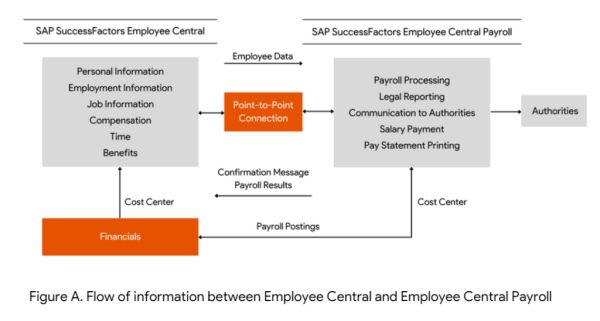
The SuccessFactors Employee Central Payroll module combines proven SAP payroll technology with the latest innovations and service delivery. This enables users to automate and accelerate payroll processing, reduce errors and simplify payroll management. SuccessFactors Employee Central was also proposed due to its ability to provide comprehensive integrated core HR capabilities including Master Data Management, HR Workflow Automation and Position Management.
In short, SuccessFactors Employee Central Payroll addresses compliance while Employee Central delivers the key HR process and information required for that payroll to run.
Designing and implementing for compliance
The implementation followed Zag’s Delivery Framework, based on SAP’s Activate Methodology that comes equipped with best practice approaches, pre-configured business processes, documentation collateral and learnings. It follows four key delivery phases; Prepare, Explore, Realise and Deploy.
Zag’s framework involves closer involvement with the customer, including more onsite support and collaboration than the standard SAP methodology. In the Ministry’s case this was vital, “The Ministry was new to SAP; we didn’t know the system, so we were relying on Zag to bring and transfer that knowledge,” says Ngarimu.
As the solution implementer, Zag delivered:
- HR processes (based on SuccessFactors Best Practices for Employee Central),
- Payroll processes (based on SuccessFactors Best Practices for Employee Central Payroll)
- Additional Employee Central HR processes (deltas to Best Practice)
- An integration catalogue (including integration with non-SAP systems, using SAP Cloud Platform Integration)
- Testing services (strategy, planning, execution & management)
- Data migration (4,500 employees-worth of data)
- Programme and cutover management
Zag kept to SAP standards and best practices, including deploying the standard NZ SAP Payroll set up and delivering point-to-point integration between Employee Central and Employee Central Payroll. In only a few circumstances was it required to deviate from standards to ensure compliance. The main example of this is how Annual Leave is delivered. Typically, the SAP standard leave is done in hours or days but to be compliant with the Holidays Act, Annual Leave needs to be delivered in weeks. Leaning on their wider consulting team, Zag provided a small amount of development to ensure Annual Leave was delivered in weeks as required.
Remote delivery
The project started in April 2019 and went live in June 2020, with the national lockdown due to COVID-19 necessitating some delays. Despite this, the project team successfully transitioned to remote working to maintain momentum. “We had the backing from our Senior Execs that this was a very key and important project and therefore needed the resources to keep it going,” says Fulbrook. “Everyone in the project team from the Ministry and Zag pulled together and worked really well to continue delivering critical phases of the project remotely, including the second dress rehearsal.”
Testing for compliance and usability
Testing was a significant exercise, commencing in November and completed at the end of March. The testing stream had two vital focuses: testing for compliance and, simultaneously, testing an entirely new system against a large number of use cases.
System Testing, System Integration Testing and End-to-End Testing were executed to ensure individual modules function and integrate at a business process level and that the relationship between applications meets known requirements to work as one integrated end-to-end solution for the Ministry.
The Parallel Payroll Test is a key input into the verification that the Employee Central Payroll engine is fit for purpose, legally compliant and delivering to expected outcomes. It highlights differences between how the legacy system calculated payroll elements, compared with how the new solution will calculate these elements. As the Ministry had a third-party system engaged in remediation, there was an added layer of complexity as there was no single source of truth for payroll comparison. Given the need to comply with the Holidays Act, payroll conversion had to result in 100% reconciliation. All the intricacies were tackled and each of these changes were reconciled and proven to be correct.
Zag’s testing team brought deep familiarity with Holidays Act compliance along with more than 50 years of combined experience in SAP Payroll. The preloaded test scripts that Zag provided as part of an acceleration package proved beneficial, as did the fact that Zag’s testing and implementation teams used aligned methodologies. The combined Zag and Ministry’s testing teams were also able to deliver the most crucial phases of testing remotely during the lockdown.
Outcomes and future opportunities
With the switch to SuccessFactors, the Ministry is now delivering correct pay in full compliance with the Holidays Act (2003), and remediation is now being executed from the new system. The solution is also compliant with Government cloud standards.
SuccessFactors offers the Ministry and its staff advantages beyond compliance. Automated processes, workflows and built-in business rules have substantially reduced the paper trail and data entry challenges that occurred with the old system. Crowther says “the workflows are really good, and it’s a big step forward for us as a lot of our processes were done on paper before. The payroll team really like the new system. Pay runs are now smoother, everything is quite instant, and they can make changes and see the results in real-time.”
Staff and managers can access self-service HR functions like timesheets and leave (including via mobile). “All employees can now look at their leave balances on their phone, put in leave requests and managers can approve these requests on their phones too,” says Fulbrook.
“There are further strategic opportunities for the Ministry to pick up on when we’re ready, such as new workflows within the current system and potential deployment of further SuccessFactors modules down the line,” says Ngarimu.
“Knowing that we are looking after our people and complying with the law is the bottom line for us,” says Fulbrook. “It’s an ongoing process for the Ministry getting 4,500 people trained and familiar with the new system, but we are happy to be on a compliant and modern system.”
“We will continue to partner with Zag to support our SuccessFactors system.”
Zag’s Nick Mulcahy is pragmatic about SAP’s much heralded ‘Rise with SAP’ – designed to help accelerate S/4HANA cloud adoption – describing it as more of a natural evolution of SAP’s cloud offering, rather than a revolutionary change.
SAP announced the Rise program, which bundles application licensing, managed cloud infrastructure and managed services into a single subscription offering, in late January, coining it ‘business transformation-as-a-service.’
Put in the investment upfront to make sure you don’t close the door to future transformation
The promise? Lowering total cost of ownership by up to 20 percent, along with easier cloud migration, faster time to value and greater flexibility.
However, Mulcahy, CEO for SAP consultancy Zag, part of Accenture, says in the early days at least, the biggest benefit for customers will be a little more straight-forward: Contract simplification.
“If you were to sign up to an offer similar to Rise, currently it would require multiple contracts, all with their own terms and conditions and hundreds of pages of legal documents,”
“There are a few interesting services that are bundled in the Rise offering that were not there with S/4HANA, but it is still in its infancy phase. We’re looking to see where we get to by the end of 2021.”
What we do know is that customers will be able to choose their deployment – public cloud or private cloud – and there are four categories of additional services: Tools and services to help customers migrate, the business process optimisation promised bythe Signavio acquisition, additional offerings from the Business Technology Platform, and the ability to bundle offerings from the wider business network.
“With the first category, there are tools and services to help you migrate if you are already in ERP and trying to migrate your S/4HANA solution up into SAP’s cloud offering with Rise.”
The tools, such as readiness checks and making sure code is ready to go, already exist today, but now bundled in are options for learning hub licenses, ensuring customers are more prepared for S/4HANA.
Some of the services available on the Business Technology Platform, the new iteration of SAP Cloud Platform, are also available for bundling, including Cloud Platform Integration, SAP Analytics Cloud and intelligent Robotic Process Automation.
The final area is around the business network – the ability to bundle the Ariba Network, the Asset Intelligent Network or Logistic Business Frameworks.
“They can now be bundled into the single subscription license as well. So, if you have issues around procurement, or want to automate some of your procurement processes, there is opportunity to integrate those into the single license under Rise.”
But there are some key components in SAP’s stable that do not look to be part of Rise, at least, not for now, including SuccessFactors, Concur and C/4HANA.
Despite that, Rise has already won some local fans. Mulcahy says, with one customer already on Rise another in the presales phase and others considering Zag’s roadmap assessment to understand if the program is the right avenue for them.
Mulcahy says the potential uptake in Australia – and the rest of the world – is likely to be greater.
For now, with Rise still in its infancy, Mulcahy says there are two main use cases for the new offering: Those already on ERP and wanting to shift to the public cloud quickly with extras such as the analytics cloud; and those who do not want to be burdened by frequent upgrade cycles and are finding the private cloud option attractive.
SAP has 20+ industry solutions which are only available on private cloud.
As with any multi-pronged product strategy, there are caveats, and Mulcahy is clear customers need to think carefully with consideration of their future business aspirations, particularly given that there is no migration path between S/4HANA public cloud with Rise and S/4HANA private cloud with Rise.
“So, if you are a retailer trying to do a quick public cloud implementation in finance for example, and then at a later stage you want SAP’s full blown retail system, you’ll find yourself on the wrong version.
“You really need to put in that investment upfront to make sure you don’t close the door to future transformation and future innovation by going with a fast public cloud implementation and then wishing you had actually kept the door open to the future by being able to add on applications and other bolt-ons.”
Hydro Tasmania has teamed up with SAP specialist partner Zag to convert to SAP’s next-generation ERP, S/4HANA, along with Fiori 3.
The upgrade has streamlined business processes and offers a consistent, modern SAP user experience for the sustainable generator’s 1100 employees.
Implementing a new Enterprise Resourcing Planning (ERP) system in a 1000+ seat company can be challenging at the best of times, let alone when you’re going through an organisational restructure, the financial year-end is looming and an unprecedented global pandemic has changed project delivery as you know it.
“It’s now low effort for us to start bringing data that lives in different parts of SAP together on the same dashboard, making people’s lives a lot easier.”
The odds were stacked against Hydro Tasmania with a number of internal setbacks and extraordinary external challenges, but thanks to stringent governance and documentation, and the dedication of those involved, Hydro Tasmania successfully converted from SAP ECC to S/4HANA with Fiori 3, in under 12-months. Here’s how they did it.
About Hydro Tasmania
Hydro Tasmania is Australia’s leading clean energy business, its largest producer of renewable energy and largest water manager. Supporting Tasmania’s communities and economy, Hydro Tasmania employs more than 1,100 people to manage a large asset footprint that produces approximately 9000-gigawatt hours of clean electricity from hydropower. That’s enough to sustainably power 900,000 Australian homes and small businesses. Hydro Tasmania also generates energy from wind and gas. Its system has a total capacity of more than 2600 megawatts and includes 30 power stations and more than 50 major dams.
The business case for S/4HANA
As a large asset-intensive public sector organisation, Hydro Tasmania relies on a powerful ERP solution to run its mission-critical business operations and meet reporting requirements. After many years leveraging SAP ECC, Hydro Tasmania wanted to reap the benefits of converting to SAP’s newer, intelligent real-time ERP – S/4HANA. “At Hydro Tasmania, we rely on our integrated SAP ecosystem to support our core business. It was integral for us to convert to SAP S/4HANA and continue building our capability for the future,” says John Barriga, Chief Information Officer.
“We saw the conversion to S/4HANA as an enablement project to get us onto newer technology, opening the door to streamlined, simpler processes and improved user experience with Fiori 3,” says Anna Bird, GM Corporate IT. Hydro Tasmania would be one of the first SAP customers to upgrade to Fiori 3, SAP’s newest user experience design for the ‘Intelligent Enterprise’.
Deciding on the partner and conversion approach
As part of its conversion preparation, Hydro Tasmania did a S/4HANA readiness assessment with a Bluefields provider. When Hydro Tasmania tendered the market, one of the bidding vendors – Zag, identified important items and details that this Bluefields tool had missed and demonstrated how these areas could be successfully addressed in a collaborative Brownfields conversion with Zag. A Brownfields approach would reduce the data migration effort required, lower the risk of data loss and an adverse impact on Hydro Tasmania’s integrated systems, add-ons and custom objects. It maximises the realization of business value while minimizing disruption to users.
“Other vendors said they would do the conversion TO us, Zag said they would do the conversion WITH us, that’s the main reason we selected Zag as our partner,” says Barriga. “And Zag as a partner is right-sized for our organisation. Sometimes, if you’re engaging the Tier 1 type players, you can get lost as a small fish in the big pond. The willingness of Zag to collaborate with us on the ground and work as one team stood out,” says Bird.
Replanning and remote delivery
In 2019, Hydro Tasmania and Zag began the 10-month process of delivering an SAP ECC6 Brownfields conversion to S/4HANA 1809 with Fiori 3, sharing the mix of scope responsibilities. “At the start of the project Zag ran workshops on-site in each functional area, essentially performing a gap analysis, highlighting what the new system would deliver – this strongly contributed to the success of the project from a change management perspective,” explains Tim Rockett, Project Manager for Hydro Tasmania.
But the project was kicking-off at a time of organisational change for Hydro Tasmania. The company was going through an organisation restructure and had two major system implementations running in parallel resulting in some disruptions to the S/4HANA project.
“To add to the complexity, the COVID-19 pandemic created an unexpected and complicated challenge impacting everyone on the project. This is where we relied on three key factors: a strong team, a reliable partner and a solid platform,” says Barriga. Zag and Hydro Tasmania identified and managed the project’s risks weeks before the pandemic materialised in Australia. When it was required, the project team quickly adapted to remote working and virtual collaboration.
“The other ongoing project at Hydro Tasmania, a new HCM system implementation, was running in parallel creating implementation complexity and resource contention,” says Rockett. “Management realised that we couldn’t do both projects at the same time, one of them had to be paused. Throughout that process, Zag was extremely helpful and committed. How Zag responded to the crisis and how well they worked with us ultimately played into the steering committee’s decision to progress the S/4HANA conversion and halt the HCM project.”
“At this point, we had one chance to get the S/4HANA conversion in before the end of our financial year,” explains Rockett. “Zag and Hydro Tasmania replanned the conversion schedule together, understanding that there was no contingency, we had to do everything exactly when we said we would do it, correctly and remotely.” From March to June 2020, all project activities were delivered 100 percent remotely, including the two dress rehearsals and the Production cutover/go-live.
“Remote working went seamlessly. It was well managed, and the strength of the team shone through,” says Bird. “The early onsite collaborations and relationships we built with Zag helped us engage well later in the project remotely.”
Conversion methodology and phases
Hydro Tasmania’s SAP landscape consists of Playpen, Development, Test and Production. In the conversion, all tiers were successfully upgraded with three additional conversions performed in a standalone environment and through the two dress rehearsals. “It proceeded very, very well with the tangible benefits of lessons being learnt and applied throughout the iterative approach to implementing,” says Rockett.
Deploying in a playpen environment helped staff familiarise themselves with the new system, uncover any capability gaps and then build functionalities to resolve defects and disparities. The two dress rehearsals had increasing production cutover-like qualities with formally documented issues and resolutions that were put into practice in the production cutover.
Executing the Production cutover
“We iterated through the cutover process itself. We had a comprehensive, lengthy and very well-reviewed cutover run sheet that was backed by lengthy, comprehensive and specialised documentation for the more complicated tasks in the run sheet,” explains Rockett. “Not co-locating for the cutover had the potential to be a massive problem for the project, but it wasn’t at all. It went extremely smoothly, a testament to the practical lessons learnt activity that had taken place.”
Going live on S/4HANA remotely in the middle of month-end, soon after an annual financial audit and three weeks before financial year-end is a major challenge with significant business risk, but Hydro Tasmania and Zag stuck together to deliver the conversion on-time and on-budget with no noteworthy defects, issues or disruption to business operations.
“It wasn’t ‘you’re the supplier and I’m the customer’ – we were one team,” says Rockett. “Zag showed a notable commitment to the success of the project, working through the night to resolve time-critical issues – not that we needed to resolve things all the time – but that attitude was there as a matter of course which was outstanding and played a big part in the success of the project.”
“Choosing Zag, a partner that we knew we could work and collaborate well with, really paid off in the difficult stages of the project,” says Bird. “Based on the strength of our partnership and the determination of both parties to get a good outcome, we came through it.”
Meeting requirements for financial year-end
“Having a successful end of the financial year in a 2-week-old ERP solution was not a given, there was some nervousness around that,” explains Rockett. “Zag certainly helped make it happen by supporting the Finance team before, during and after the go-live process, giving them confidence that the solution would do what they need and had the correct data in it, enabling them to create the reports and complete the tasks they needed to at the end of the financial year in the new system. This was crucial. We’re audited all the time and we’ve got to report to the Australian Government so, if we were unable to do our end of financial year processing, it would have been a serious problem.”
The conversion outcome and benefits
“S/4HANA has been a solid and reliable platform for the organisation,” says Barriga. “In terms of technical benefits, we’re seeing notable faster response times, better system performance and higher availability,” says Rockett, thanks to S/4HANA’s simplified architecture.
Hydro Tasmania’s employees are very pleased with the new systems’ speed and usability, commenting on the “ease of use”, “better interface” and “faster performance”. S/4HANA gives them greater process visibility and Fiori 3 provides a more rapid, streamlined and intuitive user experience. Staff noted how the additional transparency and ease of use have helped them work more efficiently and collaboratively, making BAU processes quicker and easier.
“For non-expert SAP users, the ability to find what they need to do within SAP is significantly enhanced; the search functionality and the logical organisation of data in key functional areas is a step up from the previous world,” Rockett explains. “And this was just an enablement project for Hydro Tasmania, we weren’t expecting to see benefits like this from the conversion itself. It was to pave the way for future enhancements and digital innovations that will provide more benefit which we’re kicking off now.”
A brighter future with S/4HANA
“The conversion opens the door to several out of the box features that S/4HANA delivers. It’s now low effort for us to start using things like Overview Pages and Analytical List Pages, essentially bringing data that lives in different parts of SAP together on the same dashboard, making people’s lives a lot easier,” says Rockett.
“We’ll continue to decommission older parts of our SAP landscape that we can now use S/4HANA for and make use of new innovations as they arise with SAP focussed on this latest generation of its product,” says Bird. “Being on newer infrastructure and downsizing our landscape helps us lower the cost of annual upgrades and CAPEX spend in future years.”
“I was very thankful to have partnered with Zag, as they met every challenge with the highest levels of customer service and expertise. Zag and Hydro Tasmania integrated as one to deliver the solution and the result has been a successful and seamless conversion for our customers and employees. One that SAP, Zag and Hydro Tasmania can be very proud of,” comments Barriga.
Leading SAP specialist, Zag, has announced a new leadership appointment to support its award-winning e-commerce practice.
Stuart McMinn steps into the role of E-commerce Business Line Manager with responsibility for developing Zag’s e-commerce consulting business, leading customer engagements and overseeing the design and delivery of e-commerce projects.
McMinn is a seasoned SAP expert who brings more than 35 years of experience in IT and 28 years in SAP with broad industry exposure.
“After all, this is where the magic happens.”
He has been with Zag for over 13 years and has spent the last decade as an enterprise architect in the customer solutions team designing and leading large, high-profile customer experience, supply chain and S/4HANA projects.
His experience and skills have seen him become a sought-after resource amongst Zag’s clients and prospects.
In his new role, McMinn will lead a tight-knit team of 11 experienced e-commerce consultants supporting its continued upward growth trajectory and success with delivering positive results for customers.
The role will be focused on opportunities in the New Zealand market, with Zag actively expanding its footprint in Australia.
“I was drawn to the opportunity to work with this talented resource pool and an all-round great bunch of people who work exceptionally well together as a team already.
“I aim to provide them with new opportunities to apply their passions and skills through cross-team collaborations and more holistically designed and integrated SAP Commerce solutions for customers. After all, this is where the magic happens. Transformation projects that deliver connected, data-driven and engaging customer and user experiences in an agile way to drive maximum value and innovation,” said McMinn.
The SAP Commerce solution, previously branded SAP Hybris Commerce after SAP acquired the e-commerce platform in 2013, provides SAP customers with an integrated e-commerce toolset over the top of their core ERP.
In line with its cloud-first strategy, SAP offers SAP Commerce Cloud allowing customers to benefit from a cloud-hosted solution with quarterly releases, whilst still supporting an on-premises version with annual releases for customers who prefer to manage their own software stack. SAP Commerce is licensed as one of the five components within SAP’s C/4HANA suite of customer experience solutions.
This market segment is undergoing rapid growth as customer experience and digital transformation initiatives gain traction, boosted by Covid-19 drivers.
Zag has established a strong capability in SAP customer experience after a major transformation programme at Ballance Agri-Nutrients, which was recognised on the global stage with a ‘Best Run’ SAP Innovation Award in 2018. McMinn was part of the team that designed the realignment of Ballance around its MyBallance farm-centric portal. The portal integrates geospatial, weather and farm data to provide enhanced value to customers from ordering fertilisers to application on-farm.
Zag’s e-commerce team also worked on a transformation programme at Auckland Council digitising its building and resource consents process, also recognised with an A/NZ SAP Best Run award in 2019.
McMinn will report to the Chief Operating Officer, Andrew Roberts, joining eight other Business Line Managers who head up Zag’s SAP, Cloud and Spatial consulting operations in Australia and New Zealand.
Commenting on the appointment, Roberts said, “Stuart knows the e-commerce team well from his years at Zag as an enterprise architect and was able to demonstrate a strong vision and leadership goals for the team. He is skilled at taking people on a journey, inspiring team members and customers with his big-picture thinking and I believe that will help us grow and add value to the e-commerce business line.”
When it comes to billing your customers, having a reliable yet flexible system is crucial. When it’s your revenue on the line, there’s no room for second-best solutions or providers.
Chorus has achieved exactly that after progressing off its 20-year old legacy billing system shared with major NZ telco Spark, finding greater flexibility, independence and speed to market for its business users and customers.
“It’s a fit for purpose modern system that works for us.”
Who is Chorus?
Chorus NZ Limited (Chorus) builds and manages New Zealand’s largest telecommunications infrastructure network so Kiwis can connect to and enjoy greater broadband.
Labelled one of the world’s best, Chorus provides open access internet networks and rolls out ultra-fast, congestion-free broadband via fibre and copper to urban and rural areas of New Zealand. The country’s phone and broadband providers, like Spark, Vodafone and 2Degrees, access Chorus’ network to offer innovative products and services to their end customers.
Company snapshot:
- Broadband connections: 1.1+ Million
- Fixed-line connections: 1.4+ Million
- Assets: 11,000 cabinets and 280,000 poles
- Annual turnover: $1 Billion
- Headcount: 900 staff
- Number of wholesale customers: 100+
Seeking independence and flexibility through transformation
“Chorus has been using a legacy billing system that was over 20 years old. It was inflexible, out of date and didn’t meet our needs,” explains CTO Finance Manager Paul Kerr.
Whilst Chorus separated from Spark in 2011, its billing runs were still being performed on Spark’s Enterprise Resource Planning (ERP) system until just recently. The key reasons for developing a new solution were remediation of the billing process from Spark as part of the formal Chorus/Spark split, to give Chorus control of billing its wholesale customers from its own SAP ERP and to provide Chorus with flexibility and agility around billing.
“We really wanted a modern billing system that fitted our wholesale business and provided a lot of flexibility. Something that we didn’t have to customise a lot but was configurable to our needs,” says Kerr. “A solution that was easy to use and integrated well with our existing systems,” adds Program Manager Adrian Blair.
“Chorus wanted to transform customer experience – provide customers with a better bill and transform the business process at the same time.”
The winning Proof of Concept
Chorus brought Zag in to discuss potential solutions for its billing requirements. Zag delivered a quick and effective Proof of Concept (POC) by extending Chorus’ existing SAP platform functionality to bill its customers through Zag development and configuration services.
This option averted the need for Chorus to purchase new software (only additional user licenses) which made the solution very cost-effective.
“Our engagement with Zag throughout the POC was really good, the technical guys from Chorus really appreciated the work that they did,” says Kerr. “There was a real commitment and focus on wanting to get an outcome through this process and it gave me a lot of confidence going through to executives to get the business case sign-off, just to see that Zag could make this happen for us.”
Why did Chorus engage Zag?
“We’d previously worked with Zag on the implementation of our financial systems, including the development and enhancements therein. Zag had supported us in this area and has been supporting our systems, so it made sense to engage with Zag on this project,” explains Kerr.
“If we were looking for a supplier in SAP, Zag would certainly be the first partner we would go to,” says Blair. “There is nothing like a proven track record of getting things done.”
Zag was appointed to deliver the billing solution and provided services for project management, solution architecture, technical architecture, development, Basis, testing and security. Chorus engaged Zag on test support right through to production implementation and production support.
How we worked together to achieve the best outcome
To deliver a project of this size and complexity in only a year, with quite a tight budget, it had to be a collaborative effort with Chorus and its vendors working together on an outcome.
“We started off working around a whiteboard in the Zag offices discussing and drawing components of the design. Quite often we would address the same thing a couple of times and challenge each other’s thinking but, at the end of the day, we respected each other’s opinions because it was clear we had the same goal in mind – a great outcome for Chorus and its customers,” says Principal Solution Architect Dafydd Hunter.
Over the project, Chorus’ trust in Zag’s recommendations grew, including the suggestion to follow a phased implementation approach. The project team did a number of sprints, showing demonstrations and playbacks every month to give Chorus confidence that things were happening.
The regularity and quality of the engagement meant that Chorus had full trust in Zag to guide them through the implementation. “Zag’s people were professional, knowledgeable and were always willing to help,” says Hunter.
Blair adds, “a key part of that trust was due to our active risk management on the project. Zag fully participated in that and understood how important it was to mitigate risk throughout the process.”
“Zag is a really easy supplier to work with, we didn’t sweat the small stuff and everything went well. When we had things to change it was easy. Having them onsite, co-locating and working as part of one team with Chorus and our other suppliers was awesome.”
The new bill and its benefits
The project delivered a working SAP billing solution that Kerr describes as a “fit for purpose modern system that works for us.”
“It’s a simpler solution, a lot less manual – the processes in the background run a lot smoother. It really helps that we were able to integrate the billing system with our other SAP finance system as well as the portal our customers use.”
As part of this project, Zag supplied Chorus with a Disputes Portal, where service providers can collaborate with Chorus around invoicing issues. This facilitates quick invoice dispute resolution.
The benefits and advantages of the new billing solution are:
- A simpler, more accurate and robust billing process without reliance on Spark
- Mitigates risk to Chorus’ revenue collection
- Full control over the end-to-end billing process
- Ability to alter pricing easily to adapt quickly to market conditions
- Increased agility meaning new products and services can be brought to market faster
- More efficient reconciliation with better visibility over the entire billing process and easier invoice tracking
- Simplified month and year-end processes
- Increased employee productivity due to process efficiency
- New insights from information handling for better reporting and analytics
- Ability to easily enhance, build and develop on the new billing platform
An outcome only teamwork can achieve
“Overall the project was viewed as very successful at Chorus, it came in on time, under budget and covered all of the functionality required. All of our revenue was captured, we’ve had no cases of any revenue leakages since go-live which is awesome given all of our revenue was at stake,” states Blair.
“We have reduced our costs and saved a substantial amount of money by decommissioning our costly legacy system and billing from our new SAP platform,” says Kerr.
Importantly, “customer satisfaction has improved and we’ve received a lot of positive feedback,” says Blair. “It’s a simpler solution, easier for our customers to understand as it provides more information about what they’re being billed for, which is great,” adds Hunter.
“This project has been a success and one of the key reasons for that has been that we’ve worked so closely and well with Zag. I always felt throughout the project that Zag wasn’t just interested in fulfilling its contract but was dedicated to delivering and driving through a successful project, which they did through collaborating with Chorus,” concludes Kerr. “I can’t thank them enough, Zag was fantastic.”
Source: This article was originally sourced from Zag
When it comes to implementing mobile apps for your business, sometimes it just ‘worx’ to do it yourself. This was the case for Hydro Tasmania’s device-agnostic asset-management application, deployed independently with minimal user training. It allows them to inspect assets offline, attach photos and videos and see work orders by geographic location.
“Fiori look and feel with offline capability.”
Who is Hydro Tasmania?
Hydro Tasmania is Australia’s leading clean energy business and the largest generator of renewable energy. It employs more than 1200 people and manages a large asset footprint to produce approximately 9000-gigawatt hours of clean electricity from hydropower. That’s enough to sustainably power 900,000 Australian homes and businesses.
Hydro Tasmania owns, operates and maintains:
- 30 Hydropower stations
- 54 Major dams
- 188 Headwork gates and valves
- 22 Canals
- 19 Tunnels
- 43 Pipelines
- 63 Generators
- 1 Gas-fired power station
- Power generation and distribution on Bass Strait islands
Evaluating cost per user
Hydro Tasmania implemented its previous mobile asset-management app in 2013. It took two full-time consultants approximately eight weeks, and three employees to roll out SAP Work Manager to 120 users on 120 devices.
Two years later, SAP Work Manager required an upgrade, costing the business a further eight weeks of investment in two full-time consultants and two employees. The business also opted for another four weeks of consulting to improve sync speed. Hydro Tasmania had around 20 regular users who were getting significant value from the app on a daily basis and another 100 infrequent users that were getting limited benefit from the app.
“Ultimately, upgrades were costing the business a lot for a relatively small user base,” explains Anthony Pierotti, SAP Functional Analyst (now Planning Supervisor) for Hydro Tasmania.
Seeking independence and scalability
In 2018, Hydro Tasmania reviewed the market for a new mobile asset-management application that connects harmoniously with its SAP ERP back-end and fits existing and required data structures. As a confident SAP house, it wanted to implement and maintain the new solution with internal resources and minimal vendor support.
Hydro Tasmania required new functionality including GIS Maps and add components as well as improved functionality for work orders, notifications and attaching documents and videos. They also wanted to increase the regular user base from 20 to about 50, which includes generation technicians, supervisors and administrators.
Why BlueWorx?
BlueWorx (previously known as MyPM) is Zag’s easy-to-use, comprehensive and affordable solution for mobilising SAP plant maintenance that works where users are.
Hydro Tasmania selected BlueWorx for the following reasons:
- “Faster sync times and more data transferred.”
BlueWorx synchronisation with SAP is swift and painless and works in the background. - “Ability to use both mobile devices and desktop with a consistent look and feel.”
BlueWorx is device agnostic working across iOS, Android, Windows 10 and desktop browsers. - “Fiori look and feel with offline capability.”
Built using Neptune Software, BlueWorx has the latest SAPUI5 Fiori user experience (UX) and works completely offline which is perfect for remote areas of operation without connectivity. - “It can be used by different workgroups with different requirements.”
BlueWorx is very adaptable to unique requirements, for example, asset-specific inspections can be easily configured in the administration and monitoring console. - “It can easily be supported by Hydro Tasmania’s developers, greatly reducing the total cost of ownership.”
BlueWorx is fast and simple to deploy, enhance and support, and requires no middleware or additional infrastructure, delivered from within an SAP ERP or S/4HANA system.
Fast and simple deployment
Hydro Tasmania opted to install and configure BlueWorx themselves with minor assistance from Zag. This involved two days of initial consulting to familiarise themselves with the product and ongoing ad-hoc support from the Zag product development team when required.
“The BlueWorx team at Zag were readily available to provide support and guidance throughout our BlueWorx implementation. They understood what we wanted to achieve and helped us to make the right moves towards a swift, successful outcome.”
Anthony Pierotti, SAP Functional Analyst
The implementation took 60 days end-to-end using functional, development, basis and security personnel part time with involvement from business users. BlueWorx was rolled out to 49 users tasked with inspecting and maintaining hydropower assets across 2000 locations. Despite the larger scale, there was only one performance-related bug after the first month of use.
Vance Chinnery, IP and S – (Acting) Corporate Solutions Manager/ SAP Solution Architect said “BlueWorx was fast and easy to deploy with the initial setup taking our people only 30 days. The implementation costs were minimal too, despite us deploying the solution to a larger user base.”
“As you’re completely within the ABAP environment coding ABAP or JavaScript – everything is visible with no black boxes,” adds Matt Harding, SAP Technical Advisor and Developer.
Tactical scheduling on the fly
Hydro Tasmania was the first to implement both BlueWorx and Crew, a new optional component of BlueWorx that allows supervisors to schedule and monitor work orders, and their staff, on the fly.
With BlueWorx Crew, supervisors easily view tasks assigned to their team and can allocate, reallocate and manage them directly, in near real-time, via the console. Planners can juggle field workers’ schedules efficiently according to changes in priorities and resources.
After all, work that is allocated faster is work completed sooner. Fewer delays and less paperwork mean lower costs, well-maintained assets and better business outcomes.
Making the most of its SAP investment and internal talent
For Hydro Tasmania, “the low implementation cost, streamlined deployment and swift user uptake were driven by BlueWorx being a great match for the business’ existing skills, technology and data,” said Pierotti, as evidenced below.
- Amount of new technology implemented
BlueWorx was deployed on Hydro Tasmania’s existing iPads and utilises the same SAP database and app servers. The development languages are ABAP and JavaScript which is the same as Fiori. - Match between existing skills and required skills
The SAP and related skills required to implement BlueWorx Crew were skills Hydro Tasmania already had resourced internally – basis, development (knowledge of ABAP and JavaScript) and functional (knowledge of SAP plant maintenance). - Data changes required
Hydro Tasmania found that BlueWorx supported the data structures created for its previous solution, so they plan to gradually migrate this data to BlueWorx over time. New data creation aligns with BlueWorx data structures to fully gain the benefits of the solution. - Number of enhancements needed
Only a few enhancements were executed, including a measurement-reading input screen and the ability for contractors to timesheet against purchase orders. “Zag completed these enhancements and kindly modified the timing and order of BlueWorx road map items to align with Hydro Tasmania’s needs,” said Pierotti. - Number and duration of training courses
Training is broken into process and system training. Process training was very small due to this being a migration from an existing mobile solution to a new one. The simplicity of BlueWorx means minimal training time is required – only two hours per location.
“The team find the interface simple to navigate and very easy to use. They like using BlueWorx, which makes support of the software a breeze.” – Anthony Pierotti, SAP Functional Analyst
‘Worx’ now and in the future
BlueWorx Crew fits Hydro Tasmania’s requirements as it has the right balance between extensive functionality and simplicity of configuration and use. It has many features to streamline the support of a larger user base and has a rapid development cycle.
Now embedded in the business, Hydro Tasmania is rolling out BlueWorx Crew to other areas of the business, including engineering, facilities, land care and Bass Strait islands. Hydro Tasmania continues to benefit from the road map of BlueWorx Crew innovations as they are released.
Source: This article was originally sourced from Zag
Daiken New Zealand (Daiken) is a manufacturer of world-class premium Medium Density Fibreboard (MDF) products renowned for superior colour, consistency and quality. MDF products are used in the construction of furniture, cabinetry and shelving, through to the design of children’s toys. Focusing on this niche allows Daiken to take advantage of a highly automated production process while leveraging technical expertise to provide value for customers through versatility and machinability.
The acquisition challenge
Due to the acquisition of a competing international company’s New Zealand (NZ) division, Daiken was required to carve out the data relating to the NZ branch from the seller’s SAP system and build a new standalone operational SAP system. The new system would house one company code extracted from the source system, which contained 49 company codes; approximately 650GB of data from the seller’s 5TB system (13 percent).
With the new SAP solution, Daiken is well placed to standardise the operational and technical excellence and continue growing and innovating.
The seller refused to use cloud options or let Daiken run transactions on any of its systems due to the commercial sensitivity of data, given they’re competing entities. The seller suggested Daiken ship two physical servers to its international headquarters in Korea to run SAP, they would then do a full copy, manually remove sensitive data and ship the servers back. This process would take six weeks and during this time Daiken’s production operations would have to be shut down, as no SAP systems would be available. With all customer orders and production data going through Daiken’s SAP system, this was not a viable option.
Data sync manager chosen to automate and streamline project
Zag approached EPI-USE Labs in response to Daiken’s request for guidance in designing and implementing a solution to carve out the data for this company code and set up in a new SAP instance. EPI-USE Labs put forward its System Landscape Optimisation (SLO) service which leverages its Data Sync Manager Landscape Transformation (DSM LT) product to automate and accelerate the carve out process.
During blueprint, all parties worked to define the project requirements, solution design and to clarify ownership of SAP data between buyer and seller. It was agreed that EPI-USE Labs would take responsibility for the data carve out from the seller’s SAP system, while Zag would provide ancillary services to support the extraction, re-build and ongoing maintenance of the new standalone SAP system. This includes resources for project management, functional testing, system configuration and interface development services.
EPI-USE Labs and Zag perform carve out and new SAP build
Daiken shipped two staging servers to Korea for the seller to restore its entire production SAP system onto. The copy took the seller five days to complete through a back-up and restore procedure, then EPI-USE Labs was given access to the servers, using DSM LT to cut the contents down to just the one company code needed and restore this to the second staging server on-site in Korea for the seller to validate. At this stage the sale hadn’t been approved, so Daiken didn’t own the data, and EPI-USE Labs acted impartially, protecting data that was commercially sensitive.
With the server installed on its network, the seller could perform multiple tests and verify EPI-USE Labs’ first build of the stand-alone system before providing VPN access for Daiken to confirm operational viability. It followed the same process for the cut-over, in just 12 hours EPI-USE Labs electronically copied the required company code data to NZ over the sellers existing 2Mb wide area network (WAN) ready for installation on Daiken’s server once authorised by the seller. On confirmation, the build of the NZ production system was executed immediately with only the data that had changed since the initial data copy needing to be transferred. Just a few business validation tests later and the system was operational 24 hours ahead of schedule.
The expectation was to get the first build between 60 percent and 80 percent accurate, however EPI-USE Labs overachieved by getting it 92 percent correct with precisely defined issues for resolution in Build 2. In under two weeks the second build was delivered at 97 percent accuracy. All up, the process took only eight weeks from blueprint through to the second test build and completed validations.
A few secondary SAP documents were missed in the first productive posting run, yet thanks to the granularity and flexibility of DSM Object Sync, EPI-USE Labs could quickly select the missing documents from the server in Korea and copy it to NZ. Using DSM’s templates and BusinessObjects workbench, all decisions and selections were recorded in the on-demand engine. The two full builds were thoroughly tested, and adjustments made, meaning an easily repeatable build cycle was in place, allowing for a predictable and automatic outcome at go-live.
Smooth cut over with no production downtime
As anticipated, the go-live weekend went quietly and the cut-over was smooth and easy. With no production downtime, Daiken wasn’t required to shut down, so customer experience and sales weren’t disrupted. Without EPI-USE Labs’ fast, secure and powerful suite of DSM products this outcome would not have been possible. The fixed price agreed upfront between Daiken, Zag and EPI-USE Labs was upheld.
A united digital future
With the new stand-alone SAP solution, Daiken is well placed to standardise the operational and technical excellence across both businesses and continue growing and innovating. The company now has more data that will be used to derive better insights. To support this, they have recently implemented SAP Business Warehouse to realise superior reporting and Business Intelligence. In its roadmap for the next 12 months, Daiken will look to move its on-premise ERP system to S/4HANA on Cloud. When it moves to S/4HANA, Daiken plans to integrate the new acquisition (Daiken Southland) into the same S/4HANA server as Daiken New Zealand, consolidating data and intelligence while making use of advanced technologies enabled by SAP’s flagship platform.
Source: This article was originally sourced from Zag
Ballance Agri-Nutrients (Ballance) is a New Zealand (NZ) farmer-owned co-operative that is committed to helping its customers farm more productively, profitably and sustainably. From a core business of fertiliser manufacturing, supply, sales and advice, Ballance has grown to offer farmers a full range of digitally enabled, science-backed products and services.
Customer Data Silos Restrict Data Insights
With the expansion of Ballance’s product offerings and distribution networks over time, silos of customer data had emerged across their business value chain. Previously, information systems did not integrate across Ballance’s disparate service offerings meaning customers had a disconnected experience with multiple entry points and interfaces for managing their farm information. Without a single source of truth, data could not be accessed or analysed across the business to gain insights into how to deliver better products and services to customers.
The Customer Experience Platform – Putting Your Farm at Your Fingertips
With SAP at the heart of its digital strategy, an implementation roadmap was established in collaboration with Zag to transform Ballance’s back office and front office operations to improve customer experience.
Zag Enterprise Architects worked with Ballance to design an omni-channel eCommerce solution that removed data silos and provided complete end-to-end visibility of the customer journey. Ballance implemented the Commerce and Marketing components of SAP C/4HANA and SAP Data Services, with the support of Zag’s experienced SAP consultants and specialist eCommerce Business Line.
MyBallance will be the common access point for all customer and third-party interactions and over time it will become the one-stop shop for all things Ballance.
The customer experience solution aligns data and business processes within multiple SAP HANA applications, combined with complementary external data sources from National Institute of Water and Atmospheric Research (NIWA) and Ag-Research. The Ballance Business-to- Business (B2B) Commerce and Marketing implementation also leverages Geo-spatial and graphical interfaces embedded within SAP Commerce pages.
The resulting platform branded ‘MyBallance: Your farm at your fingertips’, links disparate data sources to create a comprehensive and seamless digital experience for farmers across all Ballance product and service offerings from nutrient analysis and farm planning, right through to fertiliser purchasing and placement.
The solution provides a responsive User Interface (UI) design that is intuitive to use and device agnostic providing easy access to farm information 24/7 via any desktop, tablet or smartphone. Farmers can place, track and see the status of their orders and have recommendations on the MyBallance system sent to spreaders, optimising planning and collaboration between stores and contractors.
With its Inter-Active Planning feature, farmers can create, copy and edit their own fertiliser plans, manage annual fertiliser spend, mitigate potential hazards and report on planned vs actual expenditure.
For data privacy, access to the platform is controlled centrally by Ballance according to the nature of the supplier, contractor or level of customer subscription. All customer users (except casual website browsers) are required to register as a MyBallance User presenting Ballance with opportunities for communications and personalised digital marketing.
MyBallance Promotions
Zag worked with Ballance to dismantle their legacy promotions business and system behaviours to deliver a major functional release to MyBallance which enables them to use promotional coupons in the portal in a structed system and process. “We are leveraging customer insights to deliver direct marketing campaigns to our customers,” says Scullin. “With promotions Ballance is striving to offer better value to its customers and improve its supply chain efficiency.”
This project incorporated the SAP Marketing Campaign and Offer functionality with integration to SAP ERP sales ordering and billing information. Their BW layer provides ongoing monitoring and trend analysis capability.
Integrations and the MyBallance Ecosystem
Zag is building integrations between core digital applications and beneficial third-party data sources as Ballance continues to grow their customer engagement ecosystem with MyBallance. The vision is that MyBallance will be the common access point for all customer and third-party interactions and over-time it will become the one-stop shop for all things Ballance.
My Farm Forecaster
An example of MyBallance third-party integrations is the NIWA integration for farm planning and forecasting, combing climate data, soil and high-resolution weather forecasting with geo-spatial farm information. Using the SAP Commerce platform, Zag exposed property information to the NIWA developed app, branded as ‘My Farm Forecaster’, allowing registered MyBallance users to view exact weather information for their properties. This integration provides new analytical insights whereby Ballance can benchmark farm performance levels per farm, region and farming system, creating new data driven business opportunities.
My Pasture Planner
Zag redesigned and deployed a decision support solution within MyBallance for pastural nitrogen planning used by Nutrient Specialists and customers. It provides insights into the benefits of spreading a Ballance supplied nitrogen-based fertiliser by calculating expected pasture growth based on factors such as farm area, farming type and regional variations. Named ‘My Pasture Planner’, the solution supports an external web service which receives data inputs such as nitrogen plans, then performs agronomic calculations to return results back to MyBallance, complete with farm spend analytics.
MitAgator
With sustainability and compliance key motivators, Ballance entrusted Zag to integrate MyBallance with its breakthrough environment planning and forecasting tool ‘MitAgator’ developed with AgResearch. The MitAgator Risk Map brings a farmer’s nutrient budget to life, providing a comprehensive geo-spatial view of where nitrogen, phosphorous, sediment and E. coli losses are occurring around the farm. This informs farmers on which areas they should target to improve environmental performance and compliance.
Driving Business Performance and Sustainability
With its unprecedented convenience, MyBallance steps into the future of the ‘connected farm’, supporting improved management of nutrients for environmental reporting and financial reconciliation. “Due to Zag challenging what is possible and delivering exceptional results, this solution did not just deliver transformation for Ballance Agri-Nutrients, it delivered digital transformation and excellence to the entire chain of businesses connected with MyBallance,” says Scullin.
With an increased uptake of online ordering, MyBallance has reduced the administrative burden on salespeople (Nutrient Specialists) and reduced order processing times by Customer Services staff. Order entry times are 70 percent faster, only a 1-second wait for real-time insights into years of data, and sales reporting is 600 percent faster, down from 2-hours to 20- minutes. This means Ballance’s employees can spend more time servicing the needs of their customers.
Ballance has improved customer engagement through personalised data insights and optimised views. Scullin elaborates, “Through partnering and innovating in the creation of MyBallance, Zag has helped Ballance achieve 360-degree insights into our customers across the entire business, providing greater analytical, benchmarking and marketing capability that will drive new services and revenue streams for Ballance.”
Through better management of fertiliser placement, MyBallance helps farmers operate sustainably, protecting the environment while maximising production efficiency and profitability. The result is improved accuracy of fertiliser application on farms and reduced run-off contamination into New Zealand waterways.
Zag has helped Ballance digitally transform their business and set the stage for the next level of connected agriculture. Taking advantage of new opportunities provided by the Internet of Things and predictive analytics, the MyBallance ecosystem continues to grow with new applications, integrations and technologies.
Source: This article was originally sourced from Zag
AU: 1800 462 388 · +61 401 189 448