

Directors treat AI as strategy, not tech, issue…
New Zealand IT leaders are being urged to bring their boards along on the AI journey, as new survey findings reveal directors are increasingly focused on AI and technology, but lack confidence in their own expertise.
Nearly 70 percent of directors say their boards are working with management to improve productivity through AI and technology, up from 48 percent two years ago. However, fewer than half believe their board has the skills and experience needed to navigate the complexity and risks that come with it.
“Information alone doesn’t make good decisions.”
The findings, from the Institute of Directors’ 2026 Director Sentiment Survey, suggest AI has rapidly evolved from a technology issue into a boardroom priority.
Judene Edgar, principal advisor governance lead at the Institute of Directors, told iStart boards are no longer viewing AI as simply another technology topic sitting alongside cybersecurity, infrastructure and digital transformation, but instead embedding it throughout their strategy.
“What we are seeing is a very clear separation. How are we thinking about AI? How are we thinking about other technology? How are we managing cyber risk? They are quite separate conversations,” Edgar says.
The survey of 1,126 board, advisory board or committee members shows boards are increasingly focused on how AI and technology can improve business performance.
“One of the biggest shifts is that 68.4 percent of directors say the board is working with management to determine how technology and AI can improve productivity and processes,” she says.
While public debate about AI often focuses on job losses, the survey paints a different picture, with less than one-third of organisations investigating AI as a way to reduce headcount and instead focussing on efficiency and process improvement.
“That’s really about how we do things better and how we raise productivity – which of course has been a long-standing challenge for New Zealand businesses and our economy.”
The findings reflect a significant change in how boards view emerging technology. A few years ago, AI was often treated primarily as a risk management issue. Today, directors are increasingly embedding discussions about AI into strategy, workforce planning and long-term business models.
“There’s been a shift from asking whether it’s on your risk register to asking how it is embedded in your strategy and your work processes,” Edgar says.
Directors seeking advice
But, at the same time, directors recognise they may not be fully prepared for the challenge. Less than half believe their board has the skills and experience needed to deal with the growing complexity and risk facing organisations.
That capability gap comes as 80 percent of directors expect technology and AI to significantly reshape how boards operate by 2030.
Edgar says the response from many organisations has been to seek more external advice – more than 63 percent of directors reported using external expertise to support decision making.
Edgar notes increasing numbers of entities are setting up advisory boards – ‘that space between governance and management’ – something that is also a reflection of the rethinking of board structures.
However, she cautioned that boards can’t rely solely on outside advisors.
“External expertise is great, but you still need to build your own muscle memory around these things,” she says. “You need to be able to challenge the assumptions behind the advice you’re being given.”
To that end, she urged IT teams to step up to the plate and play a more active role in helping guide boards on their journey.
She notes technology teams are increasingly gaining presence in front of the board. As directors become more focused on technology IT teams need to think differently about the information they provide.
Rather than producing highly technical reports, she says technology leaders should focus on helping boards understand the decisions they need to make and the strategic implications of those decisions, showing how your piece of the puzzle fits into the wider strategy and picture. That includes framing technology initiatives in terms of productivity, business strategy, workforce implications and investment priorities.
“Understand your audience – what are the decisions you need your board to be making and what is the information that best supports that?”
“You want to give information but it’s really about what decisions you need your board to be making and what information best supports that.”
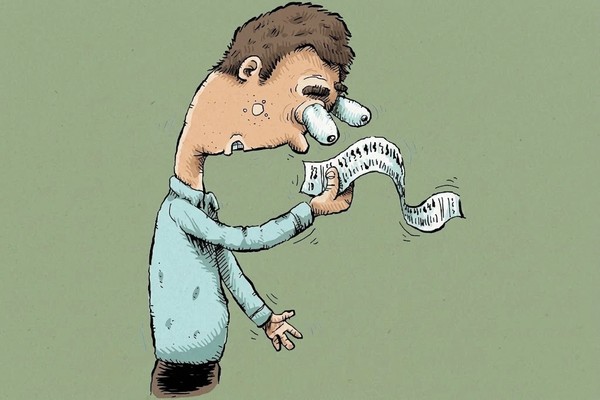
To illustrate her point she recalls a 5,568 page board pack she once received. “I had all the information I could possibly need, as if that was going to help me make good decisions.
“Information alone doesn’t make good decisions, and the tendency can be to provide more information, whereas what is needed is looking at the strategy and being sure you are part of the conversation rather than coming in from the side.”
Governance questions
The growing importance of governance is particularly evident in AI. Edgar notes many organisations are already dealing with situations where employees – including management – are using AI tools that have not been formally approved by management.
That creates both ethical and operational risks, reinforcing the need for boards and management to work together.
So what governance questions should boards be asking – and IT leaders answering?
“They need to be looking at what are our risks here? And that is quite a broad question which will include cyber but also the risks of not adopting the technology.”
Then there’s the question of the opportunities, in how the technology can support an organisation’s strategy, whether improving productivity or opening up a new market.
But there’s also the question of whether the workforce is set up to embrace the technology and how is overseeing it from the management perspective.
The board also needs to be looking at their own oversight and whether that needs to change to keep pace with technology, including what metrics are in place, how things are measured and how they’re keeping track of processes such as risk management.
As AI adoption accelerates, Edgar believes IT leaders shouldn’t wait for directors to drive the discussion.
Her message to CIOs, technology managers and executives is simple: Engage boards early, educate them on the opportunities and risks, and ensure technology becomes part of the broader strategic conversation.
“Work with your board,” she says. “Take them on the journey with you and support them to manage the risks and gain the opportunities.”