







Published on the 06/08/2026 | Written by Heather Wright
Is facial recognition entering the mainstream?…
Australian sports fans may soon be able to leave both paper and digital tickets at home with facial recognition being rolled out at selected Australian sporting events.
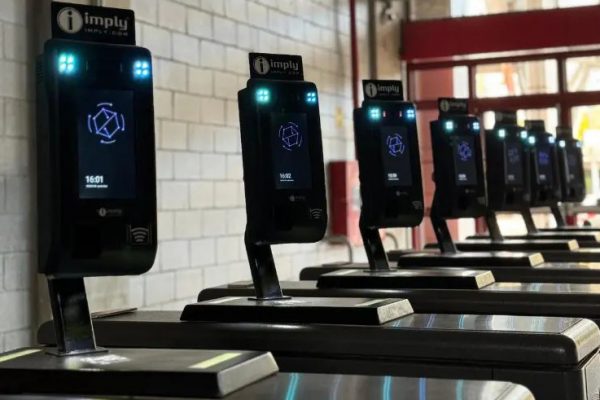
The technology allows attendees to enter venues through facial authentication – much like unlocking your smartphone or a SmartGate at the airport – rather than scanning a barcode.
“Meaningful consent requires people to understand what they are agreeing to and retain the ability to withdraw that consent.”
Geelong Football Club has introduced an ‘express lane’ for members at its home venue, the GMHBA Stadium. Members upload a selfie to their account to be verified at the entrance.
Similar systems have been an option at the Australian Open since 2024 and the technology is used in the United States for NFL games and college sports. Other AFL clubs are also reportedly exploring the technology.
The move comes as the often controversial technology appears to be broadening beyond traditional use cases such as border control, mobile device authentication and workplace access. The latest deployments suggest biometrics are beginning to move into mainstream customer interactions with organisations exploring ways to use biometric data for access control, payments, digital identity, loyalty programs and age verification.
Replacing tickets, cards, passwords and physical identification documents with biometric authentication has the potential to reduce friction for customers while streamlining transactions and access processes. Sports venues are promoting facial authentication as a faster way to move people through entry gates, but similar opportunities are emerging across retail, financial services and customer service environments.
Face, palm, pay
In New Zealand, Eftpos New Zealand recently launched biometric-ready payment terminals designed to eventually support face and palm authentication for payments, digital identity verification and age verification. Neither Eftpos NZ nor technology provider Verifone have indicated when biometric payments will become available, or disclosed whether the biometric matching will happen on the terminal itself or through the cloud.
At the same time, New Zealand organisations are adjusting to a new regulatory environment. The Biometric Processing Privacy Code came into force in November 2025, establishing specific rules governing the collection and use of biometric information. The code requires organisations to demonstrate biometric processing is lawful, necessary and proportionate, while implementing safeguards around collection, storage and disclosure.
Consent under scrutiny
As biometric technologies move from controlled environments to customer-facing applications, questions about governance and privacy are continuing to garner attention.
Curtin University lecturer and ethics of AI researcher Adam Andreotta notes facial authentication differs from broader facial recognition systems because users voluntarily provide a selfie to verify their identity, rather than being identified from images captured in public spaces. Even so, facial images and biometric information are classified as sensitive information under Australian privacy law, requiring informed consent for collection and use. Writing in The Conversation, Andreotta argues that meaningful consent requires people to understand what they are agreeing to and retain the ability to withdraw that consent.
The debate has already played out in the Australian and New Zealand retail scene. Bunnings and Kmart both attracted attention in Australia over their use of facial recognition technology in stores with regulators examining how biometric information was collected and used.
In 2024, the Office of the Australian Information Commissioner found that Bunnings’ use of facial recognition technology on customers entering its stores – for security purposes – breached privacy law. The regulator concluded that customers had not provided informed consent for the collection of facial information and found the retailer’s use of the technology was not proportionate to the risks it was seeking to address.
Earlier this year, the Administrative Review Tribunal found, partly at least, in Bunnings favour, accepting that the use of the technology was permitted, but agreeing that the company had failed to implement adequate privacy governance practices or provide sufficient specific notice to customers about the collection of their facial images. It also confirmed that even momentary or transient processing of personal information can constitute ‘collection’.
In New Zealand, the Office of the Privacy Commissioner ran an inquiry alongside FoodStuffs’ North Islands trial use of facial recognition, finding that use complied with the Privacy Act and safeguards were in place.
The acceptance gap
Research suggests public attitudes towards facial recognition remain highly dependent on how the technology is used.
A 2024 survey conducted by researchers from Monash University and the Australian National University found Australians were generally supportive of facial recognition being used by emergency services to identify victims of disasters or war, and law enforcement agencies to catch criminal suspects but considerably less comfortable with its use in retail stores and workplaces.
Chief investigator Professor Mark Andrejevic said people want greater transparency around how facial recognition systems operate, how information is stored and used, and what accountability measures are in place. The survey also found overwhelming support for notification and consent requirements.
Academic researchers have also questioned whether existing privacy frameworks are keeping pace with rapid developments in facial recognition technology. The University of Technology Sydney’s Human Technology Institute has argued Australia needs dedicated facial recognition legislation, saying existing privacy laws were not developed with widespread biometric deployment in mind. Its proposed model law recommends a risk-based approach designed to protect privacy while allowing appropriate innovation.
Supporters of biometric systems argue the technology can reduce friction in customer interactions by replacing physical credentials such as tickets, cards and passwords. Industry advocates point to faster venue entry, streamlined payments and simplified identity verification as potential benefits.
For local technology leaders, the significance of Australia’s sports venue rollout extends beyond the stadium gate. With biometric-ready payment infrastructure now entering the local market and new privacy rules governing biometric processing, the question is no longer whether biometrics will enter mainstream customer interactions. The technology is already on that path. The challenge will be demonstrating that the benefits can be delivered while meeting increasingly stringent expectations around consent, transparency and governance.