







Published on the 26/03/2026 | Written by Heather Wright
The power, jobs and sovereignty questions…
Datagrid is promising its newly approved ‘AI factory’ in Southland will supercharge New Zealand’s digital economy – but it’s also set to become one of the country’s biggest consumers of both electricity and cooling resources, potentially pushing up electricity prices and delivering few jobs in return.
The $3.5 billion data centre – set to be the first hyperscale facility in the South Island – has secured multiple resource consents for the 78,000m² facility in Makarewa, north of Invercargill, but while some are cheering, others have expressed concern that the project could quietly transform the region into an energy exporter to offshore companies, with little payoff at home.
“The key issue is not just whether the project brings investment, but how the benefits of that investment are structured and distributed.”
Landing of the Tasman Ring Network – a 6,000km trans-Tasman subsea cable linking Invercargill with Sydney and Melbourne – at Oreti Beach has also been fully approved, providing the first international subsea cable connection to the South Island and a crucial link for Datagrid and global cloud and AI operators requiring stable, low-latency international data routes.
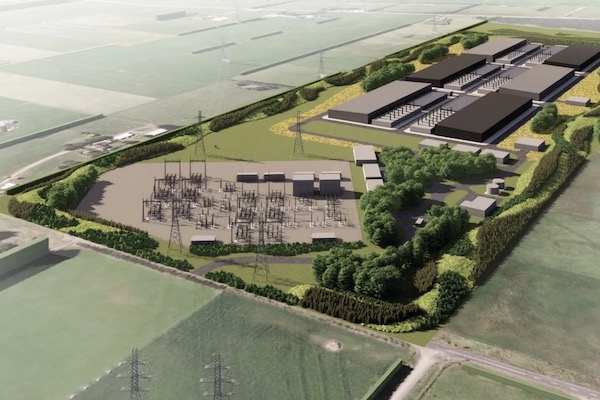
Datagrid, which is headed up by founder and CEO Rémi Galasso who was also the founder of the Hawaiki Cable (Callplus founder Malcolm Dick is Datagrid’s other co-founder), has received full resource consent from by Southland District Council, Environment Southland and Invercargill City Council, nearly six years after the project was first announced in 2020. It includes six large data halls and a dedicated grid exit point substation on 49 hectares of land.
Galasso has said the centre will deliver a ‘transformative impact’ for Southland and the country, turning Invercargill into a vital digital destination.
New Zealand already has 56 operational data centres with another 20 more planned or under construction, according to a report last year from NZ Tech (now Tech New Zealand).
Empowering Aotearoa New Zealand’s Digital Future – Our National Data Centre Infrastructure says the sector directly employs ‘over 1,000 people’ while supporting 6,800 additional roles. “The workforce is forecast to double by 2030 with up to 15,000 construction jobs expected as new centres are built.”
The report paints a glowing picture of data centres for New Zealand, saying the sector underpins $93 billion in economic activity, with $16.5 billion in ICT GDP and $76.5 billion in knowledge-intensive services.
Kiwi data centres are among the most energy efficient globally, with an average PUE of 1.3 – below the global average of 1.54.
“For every unit of energy used to power computing, almost none is wasted on overhead like cooling and backup systems.”
Powering up
But while local leaders and business advocates have promoted the development as a major economic win, there are concerns over what the data centre means for energy supply, local infrastructure and the long-term economic value to the region.
The facility’s need for uninterrupted baseload electricity, in particular, has become a focal point. The facility will draw up to 280MW – around six percent of New Zealand’s annual consumption – making it New Zealand’s second-largest electricity users behind Tiwai Point aluminium smelter. But unlike industrial users such as Tiwai, data centres can’t power down during periods of tight supply.
Dr Ulrich Speidel, Auckland University of senior lecturer in computer science, notes that between Datagrid and Tiwai ‘there mightn’t be so much power available to send north anymore’. However, he notes that likewise, threats to close the smelter might also have less bite from now on.
Speidel warns too, that while the facility itself will be powered by hydro, if the data centre displaces power that would have headed north, power may then need to be generated elsewhere using fossil fuels.
Datagrid, for its part, emphasises that the data centre will use renewable energy and take advantage of Southland’s cool climate to support energy-efficient operations. Internationally, renewable-powered data centres are increasingly in demand by large cloud and AI customers seeking to reduce the emissions footprint of their operations. The company has positioned the Makarewa site as a strategic gateway to Asia Pacific markets
The data centre will rely heavily on electricity drawn from the lower South Island grid, where Manapōuri already powers Tiwai. It signed a 15-year 140MW/year long-term power purchase option agreement with electricity generator Mercury earlier this month.
Draft fast track approval has also recently been given to Contact Energy’s Slopedown wind farm, which is expected to power the equivalent of 150,000 households. It is in close proximity to the Datagrid facility – just 50km away.
The ‘green’ credentials are a big selling point for Datagrid’s future international clients and have been heavily touted.
But energy experts have noted that hyperscale data centres require not only enormous amounts of electricity, but also substantial cooling capacity. Even in Southland’s cool climate, large-scale AI systems generate heat loads requiring continuous thermal management, contributing to pressure on both power and water systems. Datagrid will use groundwater and on-site stormwater for cooling.
Experts also note data centres can dispose of large amounts of wastewater, which may be heated above ambient temperatures, but say there is little clear information on that front when it comes to Datagrid’s plans. The original fast track application includes mention of possibly ‘coolant laden’ wastewater.
Despite this, Datagrid’s proponents argue that Southland is one of the most favourable places in the country for a development of this type, citing its cool temperatures, low seismic risk, proximity to renewable electricity generation and now direct international connectivity via the Tasman Ring Network. These conditions are seen as vital for hosting AI‑focused facilities, which require low‑latency connections and reliable, stable energy supplies.
University of Auckland electrical engineering expert Professor (Ahorangi) Nirmal Nair, has previously noted that New Zealand’s relatively clean and cheap renewable electricity could be a business opportunity, making New Zealand a ‘go-to’ place to invest in AI servers. In 2024, amid concerns about ChatGPT’s impact on power grids and electricity markets, he said if scaled correctly, New Zealand could increase electricity generation to meet the demand of data centres.
“My sentiment remains still the same,” he says in the wake of Datagrid’s approvals.
“We are in 2026 and now countries and regions are really going after building core-capability of AI and data centes, and New Zealand is still an attractive place to build AI loads supported by our current and growing electricity generation in the immediate coming years.”
Albert Bifet, director of the AI Institute at the Unversity of Waikato, is also positive, saying the approval is an important step for the country’s digital infrastructure. “AI systems require very large computing power, and facilities like this provide the data centres and connectivity needed to train and run modern AI models.”
Similar initiatives are being seen elsewhere, he says, citing Europe’s investment in networks of AI factories connected to high-performance computing centres to support research and industry innovation. “If New Zealand wants to stay competitive in AI, we will need more infrastructure like this.
““The opportunity will be to ensure this capacity benefits the local ecosystem, including universities, startups, and businesses, so that AI innovation can grow within New Zealand.”
Jobs and sovereignty
Another concern raised has been the uneven distribution of benefits. Angus Dowell, a PhD candidate in economic geography at the University of Auckland, says data centre projects like Datagrid often function as nodes in large international cloud networks, whose main value and revenue flow offshore, not to the surrounding region where they are physically located.
“My research on the expansion of big-tech cloud infrastructure suggests facilities like these are often integrated into transnational computing systems whose main markets, customers and commercial returns lie elsewhere,” Dowell says.
“The key issue is therefore not just whether the project brings investment, but how the benefits of that investment are structured and distributed. Infrastructure like this can be physically located in a region while being economically and operationally integrated into wider global cloud and AI systems. Under those conditions, local communities may provide the land, energy and enabling infrastructure, while much of the strategic control and commercial value remains concentrated elsewhere.
“These kinds of tensions increasingly sit at the centre of international debates over data sovereignty and digital infrastructure.”
There’s also the warning that while data centres are frequently promoted by operators – particularly hyperscalers – as job creators, the long-term workforce tends to be small.
While construction tends to create some jobs – Datagrid is claiming 1200 skilled and technical jobs will be created in the construction phase – there are very few new jobs afterwards because most of the operation is automated and remote controlled from places with a pool of IT staff.
Warns Speidel: “Local communities need to think a bit about whether the extra connectivity that comes with the cable is enough payback for them or whether other ways of monetising the data centre’s presence are needed too, such as special rates.”
Construction of the Datagrid facility is expected to start in June, and it is due to be fully operational by 2028.